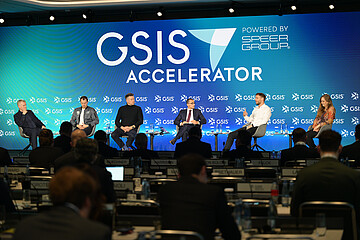
At the heart of GSIS is the question of which capabilities Europe and its partners need to build and secure in order to remain safe and competitive in an increasingly contested geopolitical environment. The conference programme focuses on three main areas: Finance and Innovation, Advanced Technologies, and Supply Chains and Resilience.
Geopolitics and innovation
The role of technological innovation in geopolitical competition will be discussed by LordSedwill on 9 December in the panel “The New Geopolitics of Innovation”. Sedwill served as the UK’s National Security Adviser from 2017 to 2020 and as Cabinet Secretary and Head of the UK Civil Service from 2018 to 2020. In 2021, he also chaired the G7 Panel on Global Economic Resilience.
“GSIS brings together people who are helping to shape Europe’s security and competitiveness – politically, technologically and economically,” says Dimitrios Argirakos, Executive Chair of GSIS. “The speakers now confirmed reflect precisely this connection. We want to discuss which technologies Europe needs, how innovation can move into application more quickly, and how we can secure critical capabilities and infrastructure for the long term.”
Defence tech: innovation and financing
How new technologies can be brought into defence and security more quickly will be at the heart of the session “Defence Innovation”. Lieutenant General Michael Vetter, Director-General for Innovation and Cyber and Chief Information Officer at the German Federal Ministry of Defence, will be joined by Marcus Wandt, Senior Vice President and Head of Group Strategy and Technology at Saab, bringing together government and industry perspectives. Wandt is also an ESA astronaut and travelled to the International Space Station in 2024.
The financing of defence tech is another focus of the programme. In the panel “Financing the Defence-Tech Pivot”, Hans Beyer, Senior Banker and Head of Defence at SEB, and Dr Markus Schillo, Senior Regional Representative for Germany at the European Investment Fund (EIF), will discuss how defence technologies can be financed and scaled.
Quantum, biosecurity and space
Emerging technologies and their implications for security will be a major focus of the first conference day. In the panel “The Innovation Frontier: Quantum and the Future of Security”, Dr Sofie Lindskov Hansen, Chief Quantum Expert at the Danish Ministry of Foreign Affairs, and Gerald Mullally, CEO of Oxford Quantum Circuits, will discuss the security implications of quantum technologies and how Europe can strengthen its capabilities in this field. Oxford Quantum Circuits develops quantum systems for customers including governments and critical infrastructure operators and completed a £260 million funding round in 2026.
Biological risks and preparedness for future crises will be addressed in “Building a Biosecurity Firewall”. Confirmed panellists include Dr Florika Fink-Hooijer, Director-General of the European Commission’s Health Emergency Preparedness and Response Authority (HERA), and Dr Andrew Hebbeler, Director of Biosecurity at the Coalition for Epidemic Preparedness Innovations (CEPI) and a former official at the White House Office of Science and Technology Policy. The discussion will address how strategic dependencies can be reduced and preparedness for biological threats strengthened.
Europe’s role in space is also on the agenda. Laurent Jaffart, Director of Resilience, Navigation and Connectivity at the European Space Agency (ESA), will take part in the panel “Securing the Orbital Economy”. His work at ESA directly connects navigation and connectivity with European security and defence requirements. On the second conference day, Rodrigo da Costa, Executive Director of the European Union Agency for the Space Programme (EUSPA), will speak on “Europe’s New Space Policy”.
Energy and critical supply chains
On 10 December, the focus shifts to Supply Chains and Resilience. Bernhard Kluttig, Director-General, Security, Gas and Hydrogen, Federal Holdings at the German Federal Ministry for Economic Affairs and Energy, will take part in the panel “Energy Resilience in Uncertain Times”.
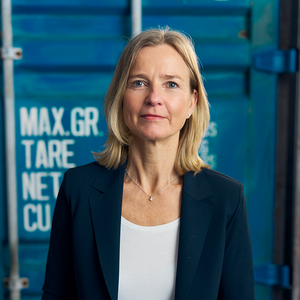
Critical minerals and the dependencies associated with them will be addressed in the panel “Critical Minerals and Supply Chain Security”. Confirmed speakers include Alexandra Bech Gjørv, CEO of the Norwegian research institute SINTEF, one of Europe’s largest independent research institutes.
Innovation Zone brings technology into practice
The Innovation Zone complements the main conference with a dedicated space where companies, start-ups and technology providers can showcase their solutions and engage directly with decision-makers, investors and potential partners. Technologies on display will include applications in artificial intelligence, cybersecurity, quantum, space, autonomous systems and dual use, as well as solutions for critical infrastructure, energy and secure supply chains. The Innovation Zone is integrated into the GSIS conference and networking programme.
Hamburg Dual-Use Forum: Technologies for civilian and security markets
The GSIS partner programmes are also becoming more concrete. Together with the Hamburg Chamber of Commerce, GSIS will host the Hamburg Dual-Use Forum on 9 December under the theme “Technologies for Resilience and Industrial Strength”. The Forum will explore how companies can develop technologies for both civilian and security-related markets and turn them into viable business models. The programme will cover maritime systems and navigation, industrial sovereignty and international examples of successful dual-use models. It will also examine the role Hamburg can play in this market based on the city’s industrial and technological strengths.
Tickets for the Hamburg Dual-Use Forum are now available and include access to the GSIS Networking Night on the evening of 9 December: Side events from our partners - Global Security and Innovation Summit
A further partner programme is being developed together with the German Maritime Centre. Taking place on 9 December, the format will focus on Maritime Security and the question of how maritime infrastructure and capabilities can be better protected. Further programme details will follow.